The most environmentally responsible home is one built to last, designed with quality materials that age well, perform efficiently, and require minimal intervention over their lifetime. Sustainability in custom home building isn't about compromise; it's about making considered decisions that benefit you, your family, and the broader environment for decades to come.
Structural and Framing Materials
Certified Timber
Timber is one of the most environmentally responsible structural materials available, it's renewable, sequesters carbon during its growing life, and requires far less energy to process than steel or concrete. When specifying timber, look for certification from the Forest Stewardship Council (FSC) or the Programme for the Endorsement of Forest Certification (PEFC), which guarantee sustainable forest management practices.
Engineered timber products, LVL, GLulam, CLT, offer the strength and dimensional stability needed for modern custom homes while making efficient use of timber resources.
Recycled Steel
Where steel is required structurally, specifying recycled-content steel reduces the embodied energy impact significantly. Australia's steel industry uses a high proportion of recycled scrap, ask your builder to confirm the recycled content of structural steel specified for your project.
Rammed Earth and Compressed Earth Block
For homeowners who want to go further, rammed earth walls offer exceptional thermal mass, a stunning aesthetic, and extremely low embodied energy when using locally sourced soil. They're particularly well suited to Melbourne's climate, retaining warmth through winter and maintaining cool in summer.
Insulation Materials
All insulation reduces energy consumption, but the materials themselves vary in environmental impact. Mineral wool (glasswool and rockwool) is widely used and effective. Recycled denim insulation, made from post-consumer cotton fibres, offers similar thermal performance with lower embodied energy and no chemical binders. Sheep's wool insulation is a naturally renewable option with excellent moisture management properties.
Interior Finishes
Low and Zero-VOC Paints
Volatile organic compounds (VOCs) in conventional paints off-gas into your home's interior air for months after application. Low-VOC and zero-VOC formulations are now widely available from premium suppliers and perform equivalently to conventional paints. Specifying them costs little or nothing extra and meaningfully improves indoor air quality.
Natural and Recycled Flooring
Solid timber floors from sustainably certified sources are a premium, long-lasting choice. Bamboo flooring offers rapid renewability. Polished concrete, where a slab is already required structurally, eliminates the need for a separate flooring material entirely. Recycled timber, salvaged from demolished structures, carries significant character and zero virgin resource demand.
Stone and Tile
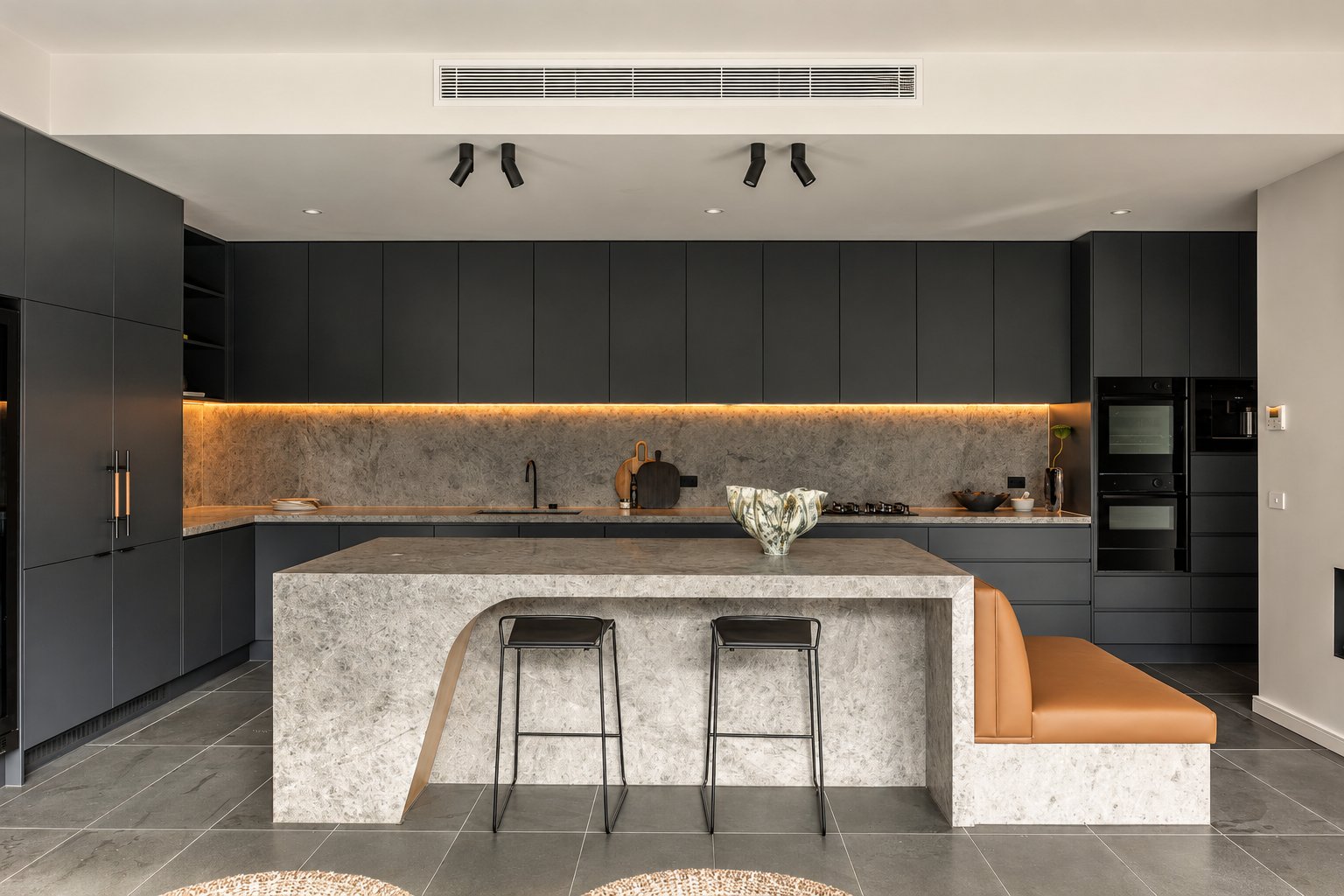
Natural stone is one of the most durable flooring and benchtop materials available, the environmental cost of quarrying is offset by a service life measured in centuries rather than years. Locally quarried stone minimises transport emissions. Recycled glass tiles offer another option where colour and texture are design priorities.
Water Management
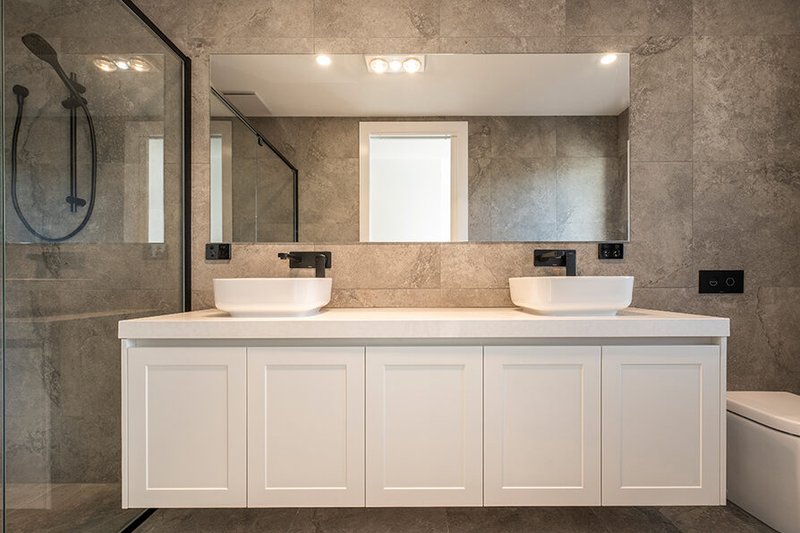
- Specify water-efficient fixtures throughout, WELS 5-star or higher for taps and showerheads
- Include a rainwater tank (minimum 5,000L) for toilet flushing and garden irrigation
- Design gardens with climate-appropriate planting to minimise irrigation demand
- Consider greywater reuse for irrigation where council permits it
The Embodied Energy Conversation
Operational energy, the energy your home uses day to day, gets most of the attention in sustainable building discussions. But embodied energy, the energy consumed in producing, transporting, and installing your building materials, can account for 30–50% of a home's lifetime environmental impact.
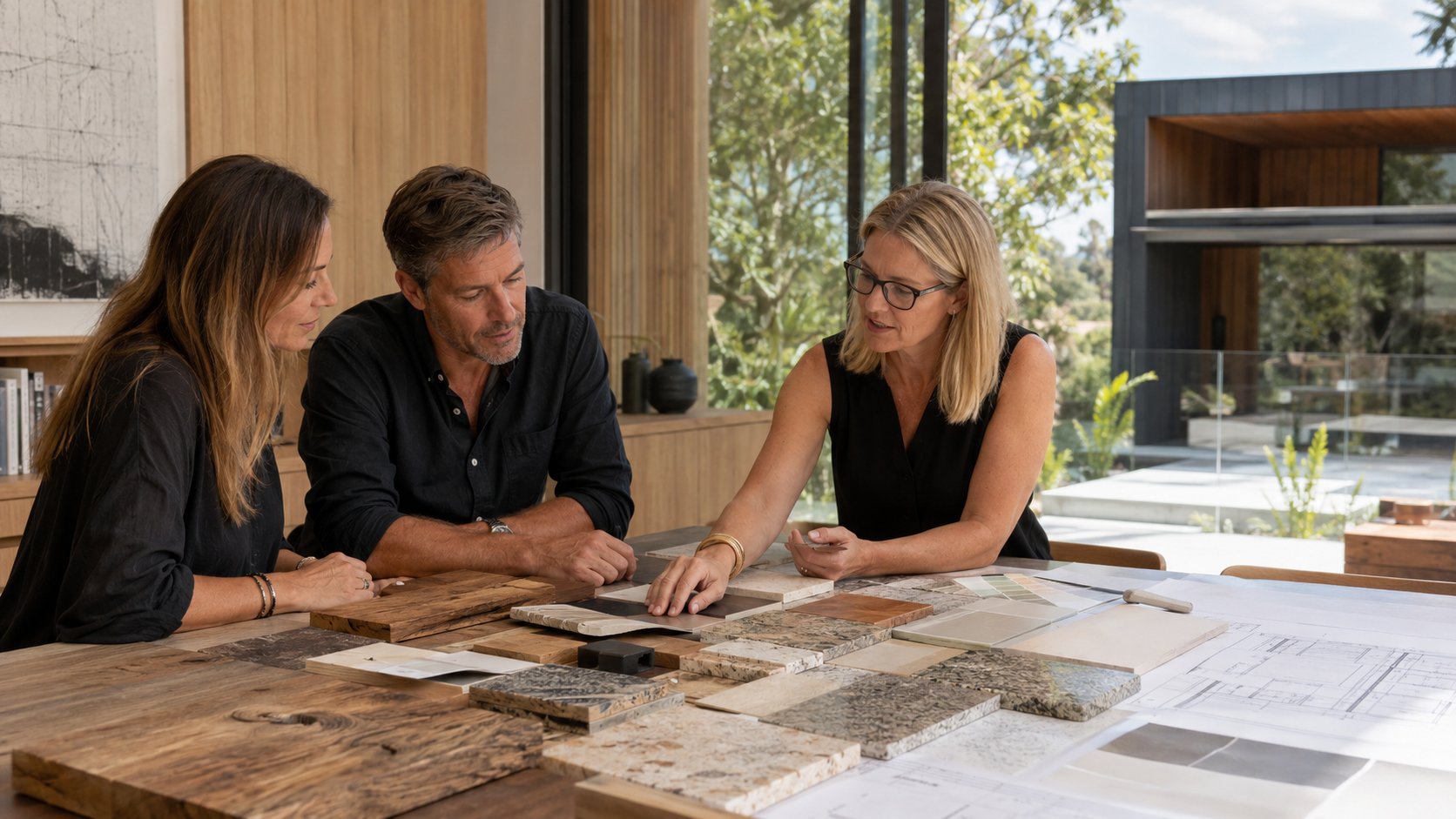
Choosing materials with lower embodied energy, longer service lives, and local sourcing all contribute meaningfully to reducing your home's total environmental footprint. Varcon's team is happy to discuss embodied energy considerations alongside operational performance when helping you make material selections for your project.