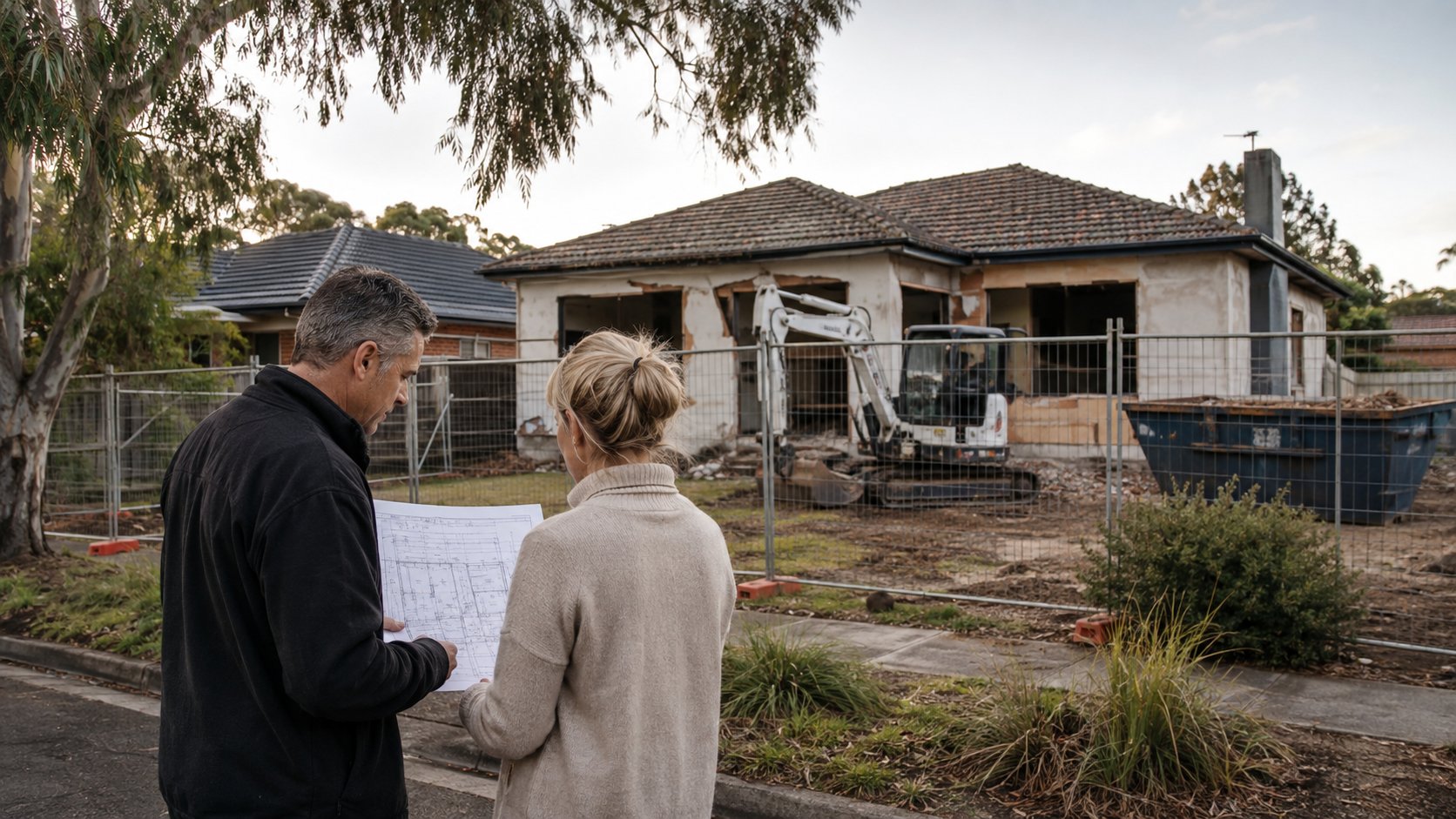
If you're planning a knockdown rebuild in Melbourne, one of your first practical questions will be: how much does it cost to demolish the existing house? The answer varies considerably depending on several key factors, and getting an accurate estimate early is essential for a realistic project budget.
Typical Demolition Costs in Melbourne (2025–2026)
For a standard single-storey weatherboard or brick veneer home on an accessible block, demolition costs in metropolitan Melbourne typically fall in the range of $15,000–$35,000. This includes the demolition itself, removal of debris, and levelling of the site.
For larger homes, double-storey structures, homes with significant outbuildings, or sites with difficult access, costs can reach $40,000–$80,000 or more. Add a significant asbestos removal requirement and the figure can climb further still.
The Factors That Drive Demolition Cost
Size and Construction Type
A small weatherboard cottage is faster and cheaper to demolish than a double-storey brick home of the same footprint. Reinforced concrete structures cost more again. The more material, the more labour and skip bins required.
Asbestos
Asbestos is the most significant cost variable in Melbourne demolitions. Any home built before 1990 must be inspected by a licensed asbestos assessor before demolition commences. The assessor will identify the type, location, and condition of any asbestos-containing materials (ACMs). If friable (loose) asbestos is present, removal costs can be substantial, $10,000–$30,000 is not uncommon for a home with significant contamination. Non-friable (bonded) asbestos, such as fibrous cement sheeting, is less expensive to handle but must still be removed by a licensed contractor.
Site Access
Demolition machinery requires clear access to your property. Narrow laneways, overhanging vegetation, neighbouring structures, and limited frontage all increase the complexity and cost of demolition. Where a standard excavator can't access the site, smaller equipment or manual demolition methods may be required, significantly increasing labour costs.
Recycling and Salvage
A reputable demolisher will separate materials for recycling, timber, brick, concrete, and steel all have salvage value that can offset some of the demolition cost. Some contractors will also allow you to salvage items like timber floorboards, doors, or kitchen fixtures before demolition begins.
Connection Capping
Before demolition can begin, all services must be capped or disconnected at the boundary, water, gas, electricity, and sewer. This is usually arranged by the demolisher but may involve separate fees from utility providers.
Permits Required for Demolition
Demolition in Melbourne requires a building permit from a registered building surveyor. Most councils also require an asset protection permit to protect footpaths and kerbs during demolition. If the property is in a heritage overlay, additional approvals may be required.
Your demolisher should manage the permit process on your behalf, but always confirm this in writing before signing a contract.
Choosing a Demolisher
Use a licensed demolisher registered with the VBA. Get at least three quotes and ensure each one includes a site inspection, quotes based on photos or Google Maps are unreliable. Ask specifically what is and isn't included, and whether the asbestos inspection and removal are quoted separately or as part of the package.
Varcon manages the demolition phase as part of our knockdown rebuild process, coordinating with approved demolishers and ensuring the site is properly prepared before construction commences. Clients who come to us at the demolition planning stage benefit from our established network of trusted contractors and our experience managing this process efficiently.